Queer Places:
Deerfield Academy, 7 Boyden Ln, Deerfield, MA 01342, United States
Westfield State University, 577 Western Ave, Westfield, MA 01085, United States
104 Old Main St, Deerfield, MA 01342, USA
Laurel Hill Cemetery, 286 Pine Nook Rd, Deerfield, MA 01342, United States
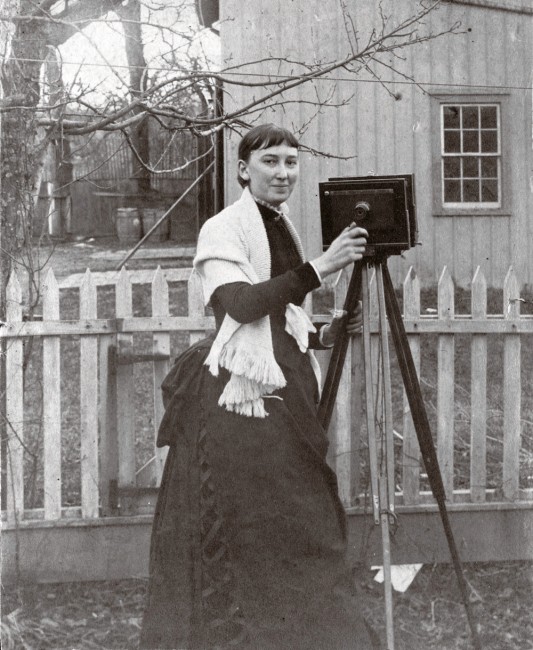 Mary Electa Allen (May 14, 1858 – February 18, 1941) was born on May 14, 1858, in Deerfield, Massachusetts, to Josiah Allen, a prosperous farmer, and his wife, Mary. She
grew up alongside her older sister, Frances Stebbins Allen, in a culturally rich rural environment that would profoundly
shape their shared adult lives and professional careers. Mary initially attended Deerfield Academy alongside Frances, where both sisters found early opportunities for
intellectual and artistic growth. In 1874, they enrolled in a two-year program at the State Normal School teacher's college (now Westfield State University) in Westfield,
Massachusetts, graduating in 1876 to embark on careers as educators.
Mary Electa Allen (May 14, 1858 – February 18, 1941) was born on May 14, 1858, in Deerfield, Massachusetts, to Josiah Allen, a prosperous farmer, and his wife, Mary. She
grew up alongside her older sister, Frances Stebbins Allen, in a culturally rich rural environment that would profoundly
shape their shared adult lives and professional careers. Mary initially attended Deerfield Academy alongside Frances, where both sisters found early opportunities for
intellectual and artistic growth. In 1874, they enrolled in a two-year program at the State Normal School teacher's college (now Westfield State University) in Westfield,
Massachusetts, graduating in 1876 to embark on careers as educators.
In the 1980s—specifically as they reached their late twenties and early thirties—both Mary and Frances began experiencing severe, progressive hearing loss, a condition
believed to be hereditary. By 1886, their declining hearing made classroom teaching impossible, forcing them to abandon their educational careers and seek a new path for
financial independence. Likely introduced to the medium by their brother Edmund, the sisters turned to photography, rapidly transforming a practical necessity into an
internationally recognized art form. They were largely self-taught, utilizing photography journals, experimenting independently, and mastering every technical phase of the
craft, including developing, printing, retouching, and mounting.
By the late 1880s and early 1890s, the Allen sisters were receiving commercial commissions and having their work published in regional books and magazines, such as Horace
E. Miller's Sketches of Conway and Picturesque Franklin. Mary also actively contributed to the visibility of their hometown, writing promotional and descriptive articles
such as "Old Deerfield" for the New England Magazine in 1892. In 1895, the sisters inherited their aunt Kate Allen’s historic home on Old Deerfield Street, which they
converted into a combined residence, darkroom, and studio space. There, they capitalized on the booming local Arts and Crafts movement, welcoming tourists who flocked to
Deerfield to buy their artistic prints. Mary notably remarked in 1901 that their prints stood "midway between the arts and crafts," treating photographs as collectable
objects of fine art comparable to local woven baskets, rugs, and blue-and-white needlework.
Stylistically, Mary and Frances aligned themselves with Pictorialism, an aesthetic movement that sought to elevate photography to a fine art akin to painting. Working
collaboratively, they specialized in landscapes, rural genre scenes, and meticulously staged nostalgic tableaux of colonial New England life. Their evocative photographs
garnered widespread critical acclaim. Prominent photography critic Frances Benjamin Johnston praised them as being among "The Foremost Women Photographers in America". Their
works were showcased in prestigious exhibitions globally, including the Washington Salon and Art Photographic Exhibition (1896), the Third International Congress of
Photography in Paris (1900), the Third Philadelphia Photographic Salon (1900), the Canadian Pictorialist Exhibition in Montreal (1907), and the Art Institute of Chicago
(1908). The Smithsonian Institution even acquired several of their prints for its National Museum. In addition to capturing the quintessential New England countryside, the
sisters traveled extensively to expand their portfolios, taking photography tours of Great Britain in 1908 and California in 1916.
Beyond their photography, Mary and Frances were deeply rooted in the civic and cultural life of Deerfield. Mary was a co-founder of the renowned Deerfield Society of Blue
and White Needlework, helping drive the town's revival of traditional handicraft arts. By the 1920s, advancing age, failing health, and diminishing eyesight caused the
sisters to step back from active artistic production and large-scale exhibitions, though they continued selling prints directly to visitors from their home parlor through
the mid-1930s. Frances and Mary lived together throughout their entire lives, neither ever marrying. They passed away within months of each other in early 1941, leaving
behind a rich archive of glass plate negatives that preserved a romanticized vision of turn-of-the-century New England.
Mary Electa Allen and Frances Stebbins Allen are frequently examined by contemporary historians, queer studies scholars, and museum researchers through the lens of
historical female domestic partnership and "boston marriages." Remaining unmarried and living independently as professional working women in a dedicated household shared
exclusively with one another, the Allen sisters embody the classic late-19th and early-20th-century paradigm of female coupling. While Victorian social norms allowed
independent women to live, travel, and build lifelong domestic partnerships under the socially acceptable guise of "spinster sisters" or professional collaborators, modern
scholarship recognizes these lifelong unions as vital components of early LGBTQ+ history. Their shared life, mutual financial and domestic interdependence, and nearly
fifty-year personal and artistic collaboration provided them with the autonomy to defy conventional 19th-century expectations placed on women, establishing a powerful
precedent for self-determined female partnership.
References:
- Flynt, Suzanne L. The Allen Sisters: Pictorial Photographers 1885–1920. Deerfield, Massachusetts: Pocumtuck Valley Memorial Association (distributed by University Press of New England), 2002.
- Flynt, Suzanne L. "The Allen Sisters: 'Foremost Women Photographers in America'." Historical Journal of Massachusetts, vol. 37, no. 2, 2009, pp. 2–10.
- Johnston, Frances Benjamin. "The Foremost Women Photographers in America." Ladies' Home Journal, July 1901.
- Allen, Mary E. "Old Deerfield." New England Magazine, vol. 7, no. 1, September 1892.
- Burch, Susan. Encyclopedia of American Disability History. New York: Facts On File, 2009 (specifically entries covering deaf artists and historical figures, pp. 27–29).
- Hannavy, John. Encyclopedia of Nineteenth-Century Photography. London & New York: Routledge, 2008.
- Gallaudet University Library. Guide to Deaf Biographies and Index to Deaf Periodicals (online biographical database profile for Mary Electa Allen).
- Pocumtuck Valley Memorial Association / Memorial Hall Museum (Deerfield, Massachusetts) – Houses the primary collection of the Allen sisters' glass plate negatives, prints, and local historical records.
- Library of Congress – Prints and Photographs Online Catalog (containing works collected and preserved by Frances Benjamin Johnston).
Support this project
This website is a passion project researched, developed, and funded entirely by me. If you find the content valuable and would like to help support the ongoing research and hosting costs, any contribution is deeply appreciated.
Thank you for keeping this independent resource alive!
My books on Amazon: Elisa Rolle's books
BACK TO HOME PAGE